Skip to product information
1 of 12

Benni Krueger

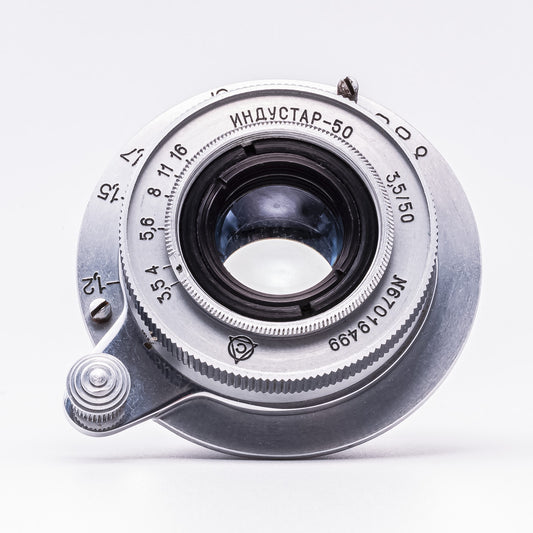
Arsenal Industar-50 50mm f3.5 SnN67019499

Arsenal Industar-50 50mm f3.5 SnN67019499

Regular price $180.00 NZD
Regular price $250.00 NZD Sale price $180.00 NZD
Sale Sold out

Conditional Rating: Very Good (VG)

Centre Resolution in lines per mm (lp/mm): 40

Corner Resolution in lines per mm (lp/mm): 24

CLA: Complete Rebuild, Clean, Lube, Adjust

CLA Date:

Lens Tech: Benni Krueger

Manufacturer: Arsenal Special Device Production State Enterprise

Brand: Industar

Designation: Industar-50

Focal Length: 50mm

F-Stop: f3.5

Image Circle Coverage: Full Frame

Serial: SnN67019499

Native Lens Mount: M39

Adapted Lens Mount: M42

Production Years: 1953 to 1990 (37 Years)

Estimated Year of Manufacture: 1967

Country of Origin: USSR

Type: Prime

SKU: 9 400559 001245

Barrel Diameter in mm: N/A

Macro Function: Yes with adapted helicoid

Macro Ratio: 1:1

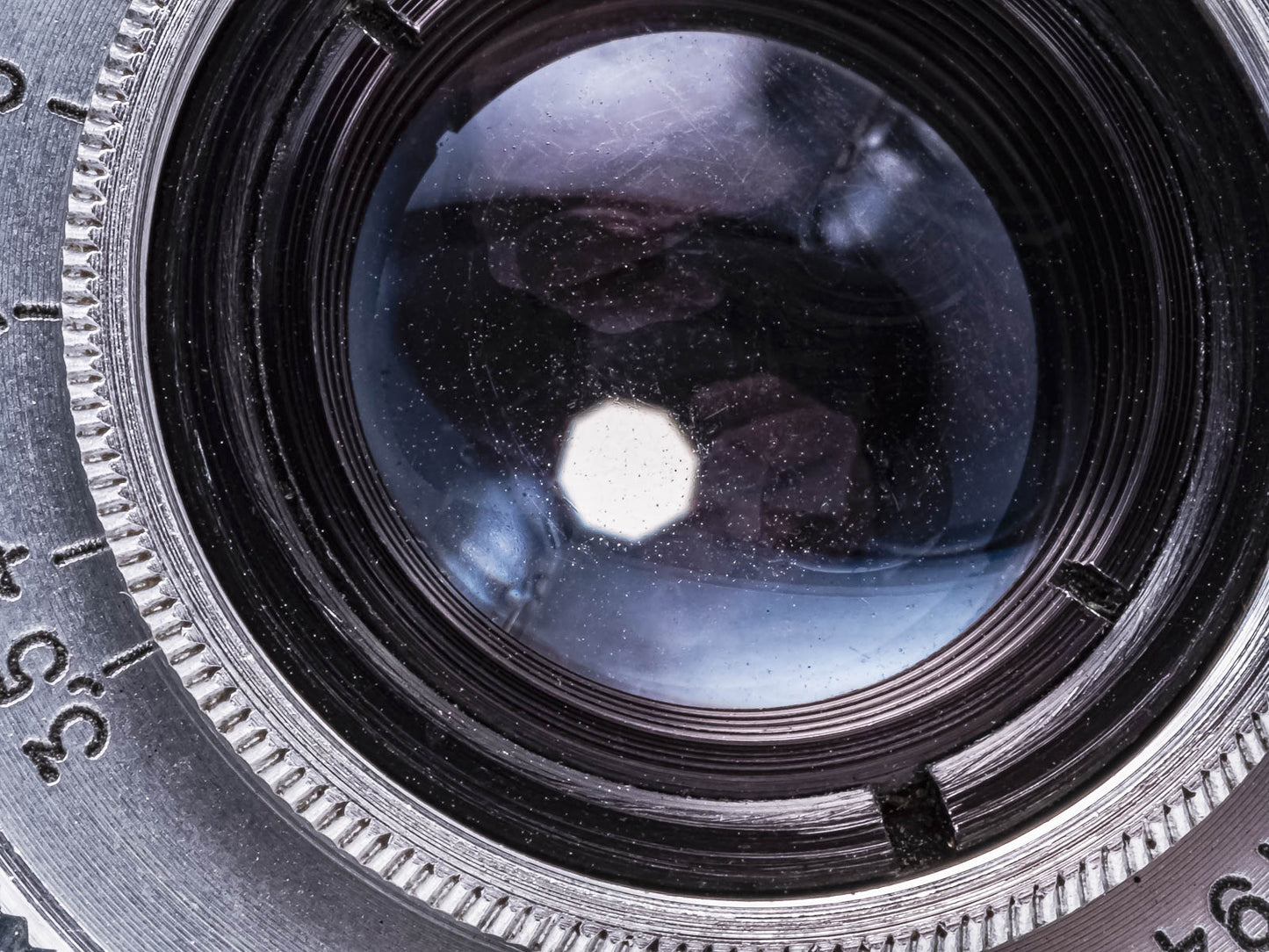
This Arsenal Industar-50 50mm f/3.5 (Serial Number 67019499) is a fascinating piece of Soviet optical history with a unique provenance. While the Industar-50 was primarily mass-produced by the KMZ factory near Moscow, your specific copy was manufactured by the Arsenal factory in Kyiv, Ukraine (indicated by the "Arsenal" branding) and was originally sold or cataloged by specialty vintage vendors like WOW Vintage Optics. [1, 2]
Decoding your serial number reveals that this exact lens was manufactured in 1967 (the first two digits "67" signify the year of production in the Soviet serial system), making it a beautifully preserved artifact from the height of the Cold War era.
🔑 Core Specifications & Design
  • Optical Formula: 4 elements in 3 groups. It is a direct Soviet copy of the legendary Carl Zeiss Tessar formula, famously nicknamed the "Eagle's Eye" for its center sharpness. [1, 2]
  • Focal Length & Aperture: A standard 50mm field of view with a maximum aperture of f/3.5, closing down to f/16 via 7 unclicked aperture blades. [1, 2]
  • Native Lens Mount: M39 screw mount (SLR variant). Note: Because this was built for early Soviet Zenit SLRs rather than rangefinders, it has a 45.2mm flange distance, allowing it to easily adapt to modern mirrorless or DSLR systems. [, 3]
  • Form Factor: A true "pancake" lens made of a lightweight, durable aluminum housing weighing under 100 grams. [1, 2]
🛠️ Handling & Quirks
  • The "Fiddly" Front Ring: The most notorious quirk of this lens is its tiny size. The unclicked aperture ring sits on the very front face of the lens. When you turn it, it is incredibly easy to accidentally rotate the entire focus barrel or block the glass with your fingers. [1, 2, 3]
  • Filter Thread: It uses an unusual, ultra-small 33mm or 34mm filter thread, making native modern lens caps or filters difficult to source without adapters. [1, 2]
🎨 Optical Character & Rendering
  • Center Sharpness: True to its Tessar DNA, the lens is surprisingly sharp right in the center of the frame, even when shot wide open at f/3.5. Stopping down to f/8 or f/11 yields excellent edge-to-edge clarity. [1, 2, 3]
  • Vintage Flare & Contrast: Because the glass elements feature very basic, primitive anti-reflective coatings (or none at all on the front), it flares dramatically when exposed to direct sunlight. This results in a dreamy, lower-contrast, distinctly retro aesthetic that looks highly cinematic. [1, 2, 3, 4]
  • Bokeh: While f/3.5 won't give you completely blown-out, blurry backgrounds like an f/1.8 lens, the 7-blade iris yields smooth out-of-focus highlights and, under the right background conditions, a subtle "swirly" vintage bokeh texture. [1, 2]
To see how this compact optical formula handles modern digital sensors and creates its signature retro look, watch this field test:
View full details